Hidden Therapeutic Power: How Molecular Hydrogen Becomes a New Hope for Metabolic Diseases?
2026-03-10
A cup of hydrogen-rich water may be changing the future of our fight against diabetes and fatty liver.
In our daily lives, we often hear about hydrogen's potential as a clean energy source, but you may not know that this smallest molecule in nature is quietly becoming a new star in medical research. Recently, a research team from the Faculty of Environment and Life at Beijing University of Technology published a comprehensive review exploring the therapeutic potential of molecular hydrogen in metabolic diseases.
From laboratory research to preliminary clinical trials, growing evidence suggests that this once-overlooked gas molecule may open up new avenues for treating metabolic diseases such as diabetes, fatty liver, and obesity.
01 Accidental Discovery
Molecular hydrogen is a colorless, odorless, and tasteless gas that has long been considered physiologically inert. However, in 1975, Dole et al. first reported that hyperbaric hydrogen therapy could induce significant tumor regression in mice with squamous cell carcinoma.
Due to the high demand for hyperbaric hydrogen therapy and the potential explosion hazards of hydrogen, this finding did not attract widespread attention. The turning point came in 2007 when Professor Ohta's research group in Japan reported that inhaling low concentrations of hydrogen (2%) at normal atmospheric pressure could markedly attenuate cerebral ischemia-reperfusion injury in rats by selectively scavenging hydroxyl radicals and peroxynitrite.
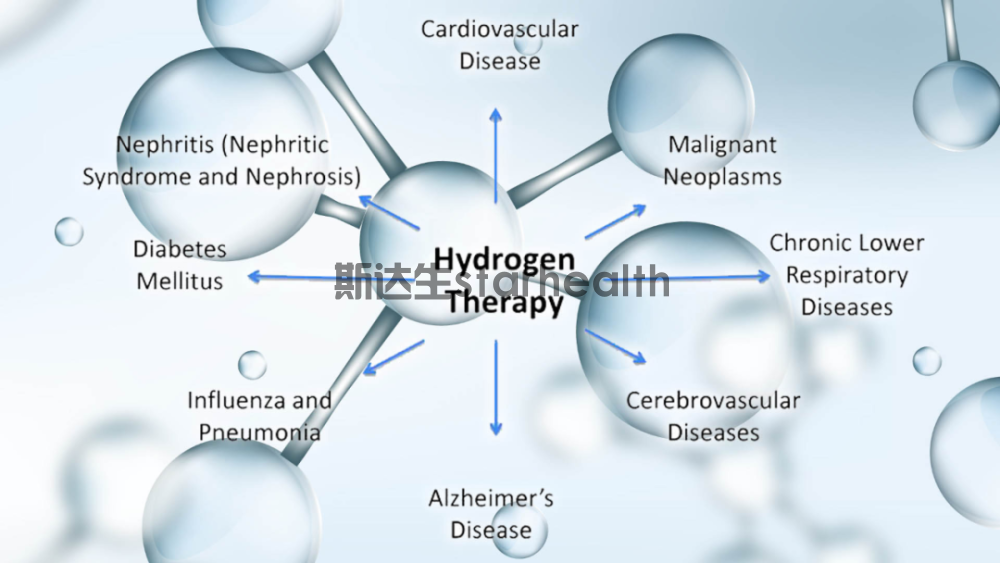
Since then, scientists have extensively explored the potential biological effects of hydrogen in a wide range of disease models, including metabolic diseases, neurodegeneration, mitochondrial diseases, inflammation, and cancer. The routes of hydrogen administration have also diversified, including oral intake of hydrogen-rich water (HRW), injection of hydrogen-rich saline (HRS), inhalation of hydrogen gas, HRW baths, and hydrogen-producing materials.
02 Metabolic Crisis
Metabolic diseases, including diabetes mellitus (DM), metabolic syndrome (MS), fatty liver (FL), atherosclerosis (AS), and obesity, are characterized by dyslipidemia, insulin resistance, defective insulin secretion, glucose intolerance, and chronic inflammation.
Oxidative stress has been implicated in the pathophysiology of metabolic diseases. Diabetes, as one of the most prevalent metabolic diseases, has become a global public health challenge. Chronic hyperglycemia leads to excessive reactive oxygen species (ROS) generation, causing oxidative stress, which further promotes the development and progression of diabetes and its complications.
Pancreatic beta cells are highly vulnerable to oxidative stress due to their high endogenous ROS production and low levels of antioxidant enzyme expression. The destruction of beta cells is a pathological component of both type 1 and type 2 diabetes.
03 Protective Effects of Hydrogen
Studies in diabetic animal models have shown that hydrogen intervention can significantly reduce fasting blood glucose levels, improve insulin sensitivity, and alleviate pancreatic beta cell damage. Notably, the glucose-lowering effect of hydrogen appears more pronounced in models with higher initial blood glucose levels.
Beyond its effects on diabetes itself, hydrogen also exerts protective effects against diabetic complications, including peripheral neuropathy, retinopathy, cardiomyopathy, wound healing, bone loss, and erectile dysfunction.
In fatty liver disease, hydrogen intervention can alleviate hepatic steatosis, reverse steatohepatitis and fibrosis, improve dyslipidemia, and enhance glycemic control. Studies have also found that higher doses of hydrogen generally exhibit better therapeutic effects, while longer treatment durations show more pronounced improvements.
04 Progress in Clinical Trials
To date, multiple clinical studies have explored the therapeutic potential of hydrogen in metabolic diseases. In 2008, Kajiyama et al. conducted the first clinical trial on hydrogen, showing that hydrogen-rich water may have potential in preventing type 2 diabetes and insulin resistance.
Subsequent clinical trials on metabolic syndrome have further confirmed the beneficial effects of hydrogen. A randomized, double-blind, placebo-controlled trial found that drinking high-concentration hydrogen-rich water for 24 weeks significantly reduced triglyceride and LDL-cholesterol levels, as well as markers of oxidative stress and inflammation.
For patients with non-alcoholic fatty liver disease (NAFLD), hydrogen intervention significantly reduced liver fat accumulation and serum AST levels, especially in moderate-to-severe cases. Hydrogen/oxygen inhalation therapy also showed significant improvements in moderate-to-severe NAFLD.
05 Unraveling the Mechanisms of Action
The beneficial effects of molecular hydrogen on metabolic diseases are mediated through multiple mechanisms:
Antioxidant effects are the most prominent property of hydrogen. It can directly scavenge free radicals, inhibit ROS generation, and enhance antioxidant enzyme activity. Studies suggest that hydrogen may activate the Nrf2-mediated antioxidant pathway, increasing the expression of downstream target enzymes, thereby alleviating oxidative damage in various organs.
Hydrogen also exerts anti-inflammatory effects by downregulating pro-inflammatory cytokines and upregulating anti-inflammatory cytokines. Its anti-inflammatory action often parallels its antioxidant effects, alleviating inflammatory responses partly through inhibition of NF-κB activation.
Anti-apoptotic effects are another important mechanism. Studies have shown that hydrogen can upregulate the anti-apoptotic protein Bcl-2, downregulate pro-apoptotic Bax and cleaved caspase-3, inhibit caspase activity, and reduce TUNEL-positive cells, thereby inhibiting apoptosis in metabolic diseases.
Hydrogen also suppresses endoplasmic reticulum (ER) stress, activates autophagy, improves mitochondrial function, and regulates gut microbiota. The synergy of these multiple mechanisms enables hydrogen to exert comprehensive therapeutic effects on complex metabolic diseases.
06 From Bench to Bedside
Although preclinical and clinical studies have provided evidence supporting the application of hydrogen in metabolic diseases, intervention effects vary across studies, with some showing no therapeutic benefits.
Factors such as hydrogen concentration, treatment duration, timing of intervention, and severity of metabolic disorders may influence therapeutic outcomes. Higher doses of hydrogen generally exhibit better therapeutic effects, while longer treatment may have more significant impacts.
Notably, patients with higher initial blood glucose levels appear to benefit more from hydrogen's glucose-lowering effect. Current research only provides preliminary evidence on how these factors influence hydrogen intervention, and more in-depth studies are needed to optimize treatment protocols.
An increasing number of clinical trials are being designed to evaluate hydrogen's therapeutic effects on metabolic diseases, but high-quality clinical studies remain relatively limited. Future trial designs should consider large-scale, randomized, controlled, multicenter, double-blind, and long-term interventions to more comprehensively assess hydrogen's clinical value.
While challenges remain in standardizing dosage, verifying long-term safety, and deeply understanding its mechanisms of action, current evidence suggests that this seemingly simple molecule may open new therapeutic avenues in managing metabolic diseases such as diabetes, fatty liver, and obesity. As more well-designed clinical trials advance, molecular hydrogen may eventually transition from bench to bedside, truly benefiting the vast number of patients with metabolic diseases.
When scientists search for complex therapeutic targets under electron microscopes, the simplest molecule—hydrogen—is quietly revealing its not-so-simple medical potential.