Heat Therapy Lights the Way: Whole-Body Heating Emerges as a Novel Approach for Depression
2026-03-10
No longer solely dependent on medication — a single whole-body heating session may bring weeks of relief from depressive symptoms.
Major depressive disorder has become the leading cause of disability worldwide, affecting hundreds of millions of people. While conventional antidepressant medications are widely used, they are often limited by modest efficacy, delayed onset of action, significant side effects, and high rates of relapse after discontinuation. In recent years, scientists have turned their attention to an ancient yet novel pathway — harnessing the body’s thermosensory system to influence brain function — opening up entirely new possibilities for depression treatment.
01 Current Limitations: The Dilemma and the Need for Breakthroughs in Depression Treatment
Depression is impacting global health on an unprecedented scale. In the United States alone, more than 16 million adults are affected, with prevalence especially high among young adults.
Existing pharmacological treatments face multiple challenges: limited efficacy, slow onset, high relapse rates after withdrawal, and significant side effects that impair quality of life, leading to poor adherence or even discontinuation of therapy.
More concerning is the recognition that current treatment strategies — largely based on modulating neurotransmitter systems — may have reached the limits of their effectiveness. These drugs act broadly across multiple brain regions, making precise intervention difficult and often triggering complex adverse effects. Scientists increasingly agree that more targeted therapeutic approaches are urgently needed.
02 Whole-Body Heating: An External Modulator of Mood
In recent years, infrared whole-body heating (WBH) has captured researchers’ attention as a potential novel intervention. By activating the body’s warm-sensitive afferent pathways, WBH leverages evolutionarily conserved interoceptive circuits to transmit warmth signals from the skin to the brain, thereby influencing emotion-regulating brain regions.
This approach bypasses the "broad-spectrum" intervention model of traditional medications. Instead, it selectively modulates depression-related brain circuits through specific peripheral sensory pathways.
In animal models, researchers have found that WBH activates serotonin neurons in the midbrain — neurons closely linked to antidepressant and anti-panic behavioral effects. This provides a biological foundation for understanding the antidepressant mechanisms of heat therapy.
03 Clinical Validation: Significant and Sustained Antidepressant Effects
Preliminary clinical findings are encouraging. In an open-label trial, 16 medically healthy individuals with major depressive disorder received a single session of WBH.
Results showed that their depressive symptom scores dropped from an average of 29.9 before treatment to 19.2 just five days after treatment — a significant and sustained effect. Even more remarkably, in nine patients followed for six weeks, symptom scores improved further to an average of 13.9.
In a subsequent randomized, double-blind, sham-controlled trial, 29 participants were assigned to either active WBH or a sham condition. The active WBH group showed significantly greater improvements in depression scores across the six-week post-intervention period, with the most pronounced effects observed at week one and persisting through week six.
An independent study also reported that hot water baths at 40°C, administered twice weekly for four weeks, similarly improved depressive symptoms.
04 Pathway Analysis: How Warm Signals Reach the Brain
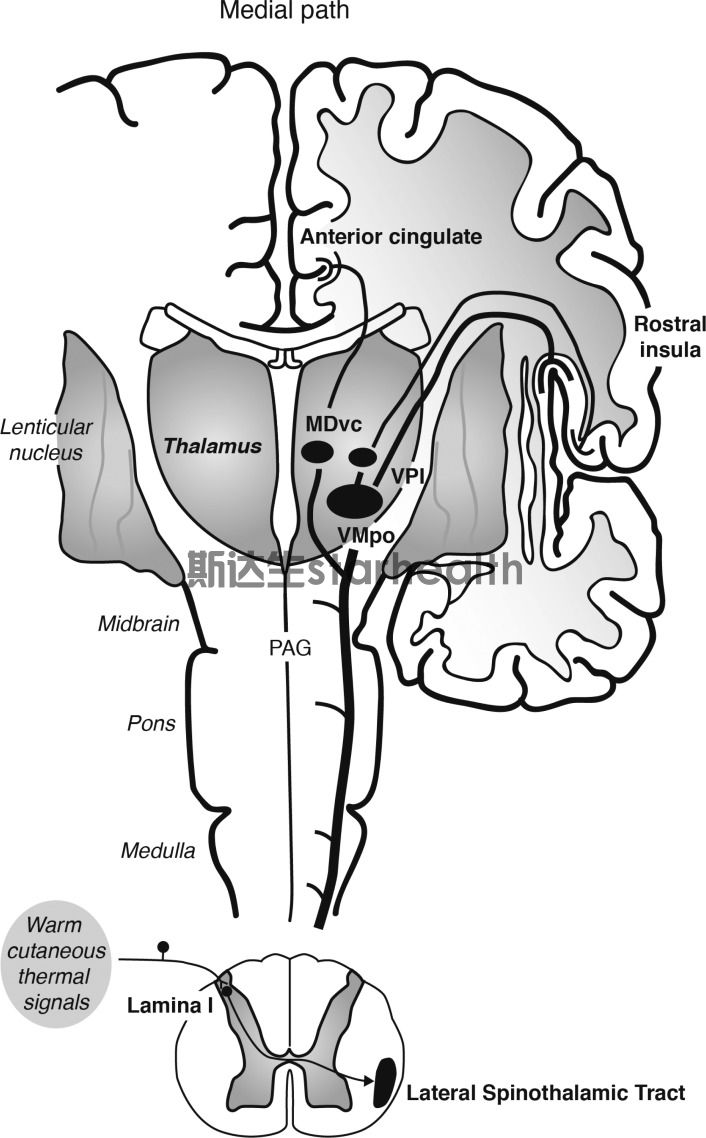
How do warm stimuli travel from the skin to emotional brain centers? Two primary pathways are involved: the medial pathway and the lateral pathway.
The medial pathway conveys the affective component of temperature sensation. Warm signals ascend via the spinothalamic tract to the thalamus, ultimately reaching the anterior insula and anterior cingulate cortex — brain regions known to be dysregulated in depression.
The lateral pathway, by contrast, conveys the discriminative aspect of temperature. Signals originating in deeper spinal layers travel through the anterior spinothalamic tract to the thalamus and then to the primary and secondary somatosensory cortices. Notably, brain regions activated by pleasantly warm stimuli overlap with neural circuits implicated in mood disorders.
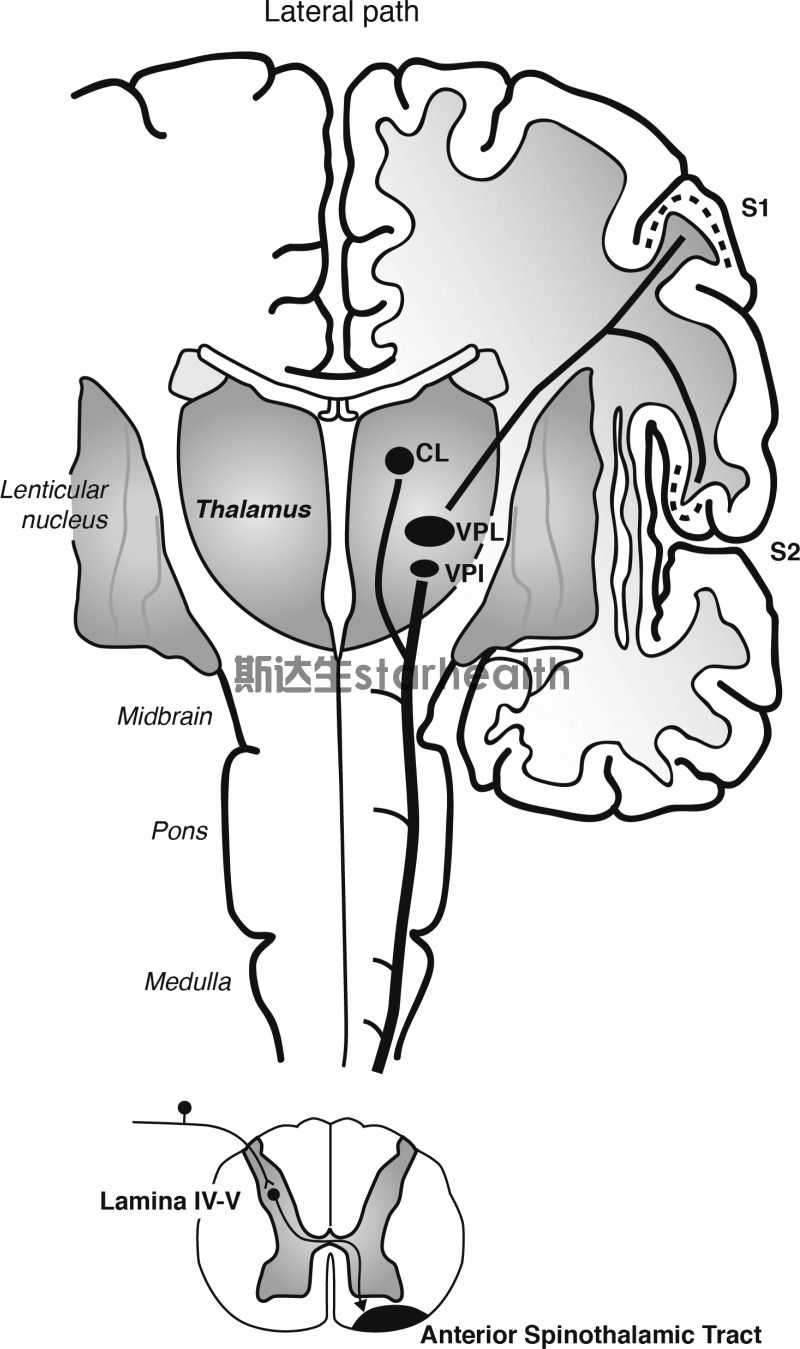
This pathway specificity suggests that WBH may directly influence emotion-related brain circuits while avoiding unintended effects on cognitive functions.
05 Future Directions: Toward Personalized Depression Treatment
Research has shown that individuals with depression often exhibit thermoregulatory abnormalities, such as elevated core body temperature and reduced sweating capacity. Effective treatments — including electroconvulsive therapy — tend to reverse these abnormalities.
WBH may not only engage thermosensory pathways for therapeutic benefit but could also produce long-term reductions in core body temperature, potentially by improving thermoregulatory cooling function. This raises the intriguing possibility that WBH might help normalize underlying thermoregulatory dysfunction in depression, rather than simply using these pathways as a conduit for symptom relief.
Importantly, higher baseline core body temperature has been associated with greater symptom improvement following WBH. This finding suggests that temperature may serve as a biomarker for predicting treatment response — a crucial step toward personalized depression care.
In a randomized, double-blind, sham-controlled trial, participants who received active WBH showed significantly greater improvements in depression scores over six weeks compared to the sham group. Effects were most robust at week one and remained significant through week six.
As research advances, whole-body heating may evolve from an “accelerator strategy” to a standalone treatment option for depression. With its rapid onset, favorable side effect profile, and potential for biomarker-guided personalization, WBH represents a paradigm shift in the treatment of mood disorders.
The views presented here are based on an interpretation of the article Whole-Body Heating: An Emerging Therapeutic Approach to Treatment of Major Depressive Disorder (Focus (Am Psychiatr Publ). 2016 Jul 16;3(3):259–265. ) and are intended for sharing purposes only. They do not constitute any form of treatment advice.